
Flight Simulators – Friend or Foe?
Flight Simulators – Friend or Foe?
They represent an incredible asset in the world of flight training and safety – and yet they can simultaneously be the device that pilots love to hate.
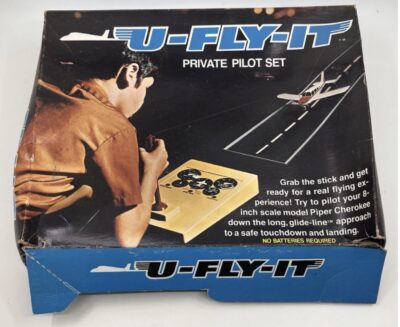
I was ten years old when I had my first brush with a “simulator”. It comprised of a long nylon fishing line, tethered at one end to our fence and to the top a rudimentary control column at the other. Along it slid a small plastic aeroplane model, a Piper Cherokee, that I landed on a cardboard runway by relaxing the back pressure on the control column, dropping the Cherokee onto the runway. It’s aerodynamic principles were wrong in every way but it kept me entertained for hours.
My first real flight simulator was the Boeing 737-300 and although it was a far cry from today’s simulators, I couldn’t have been happier. Having completed the ground school, I fronted up to the simulator centre in my coat and tie, as one was required to back then. My training partner, or “crash buddy”, was Clayton. While the largest aircraft I had flown was a 10-seat Piper Chieftain, Clay had been flying for a regional airline, so he was used to the multi-crew world and aircraft that had switches in the cockpit’s roof. Sorry, the flight deck’s roof.
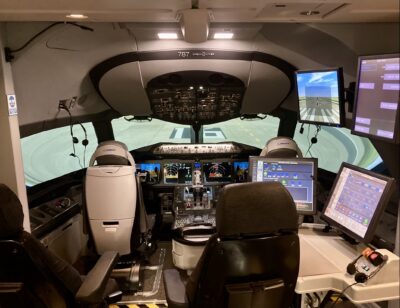
The modern simulators like the Boeing 787 Dreamliner are very different. Gone are the “night only” visual displays with two rows of lights to replicate a runway. Today, the visuals are by day or night, cities are replicated and the tug drives off and the engineer waves goodbye when you’re ready to taxi. Myriad combinations of atmospheric conditions are available alongside an endless combination of simulated systems failures.
Without doubt, the enhanced simulators have provided a tremendous leap forward in training. In the past, it was no secret that more aircraft were lost simulating certain emergencies than were lost by that emergency ever happening. Today, the most extreme scenarios can be replicated without ever leaving the ground. Furthermore, during training, the simulator can be “frozen” at any time and the situation viewed without the time pressure of a moving “aircraft”. That may be unhurriedly surveying the cockpit indications during a systems failure, or the approach lighting during different stages of a low visibility approach.
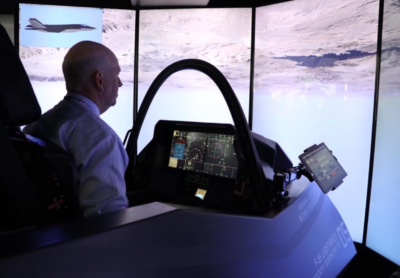
So why do many pilots dread the simulator? Fundamentally because that is where there skills come under the microscope on a regular basis. The stress can start in the weeks leading up to a “sim check” as the study begins in earnest. Once in the simulator they must display proficiency to remain flying the line, or they may be called back to complete more training – in the simulator. On the positive side, the culture of simulator training is significantly more training focussed than the more threatening atmosphere that could exist decades ago.
So therein lies the paradox. The very device that has made training more realistic and air travel more safe, is not viewed warmly by many airline pilots. Even so, there a few that would not admit to the benefits. Through these polarising perspectives, it is not difficult to see what flight simulators have been seen as both friend and foe.
RECENT POSTS


