
From Apollo to Artemis.
From Apollo to Artemis.
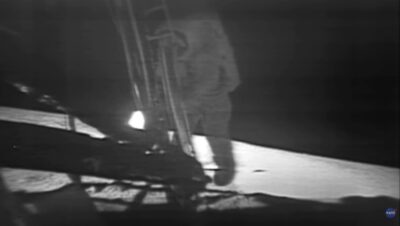
(Image from video. NASA)
It’s 1969 and it’s a grainy memory. In fact, the strongest memory is that my brother was allowed to stay home from school. Like millions around the world, I was watching a grainy image on our black and white TV, cross-legged and not quite 5 years old. As Neil Armstrong descended down the ladder of Apollo 11’s lunar module, my dad uttered something about the significance of the event but that’s a specific memory that has been lost to time. Neil Armstrong’s words have not.
Even at that age, the enormity of the undertaking amazed me. That night and ever since, I have looked at the moon and imagined men leaving their footprints in the fine lunar dust. I imagine what else they have left behind, from faded flags to the hardware of their journey that never came home. Now, I appreciate that moon when it lights my way across the Pacific, making the weather ahead an ease to navigate compared to the dark nights that find us interpreting the paints from our radar as it sweeps the night sky ahead.
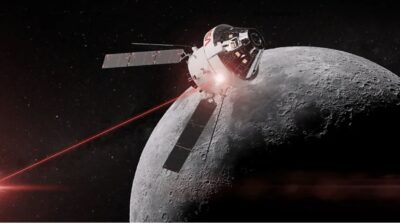
(Image: spaceconnectonline.com.au)
Now, through Artemis II, humankind has ventured back to lunar orbit in anticipation of setting foot on the surface once more. In doing so, the crew have ventured further from Earth than any human has ever travelled before. They have swept past the dark side of the moon and re-emerged, sending images of our home planet rising that can take one’s breath away. The science, the technology, the physics – it all takes the concept of human curiosity to another level. That same ingrained curiosity that drew our ancestors across strange lands and endless bodies of water.
Many reasons have been cited for returning to the moon, including the journey being a steppingstone on the way to Mars. However, regardless of the politics or motivation, it is awe-inspiring just to accept the journey for its sheer sense of wonder. The thought of four humans hurtling through space at around 40,000 km/h and taking in sights that one can only conjure in dreams. Dreams that may inspire a four-year-old that is sitting in front of a colour TV, with the world at their feet and the stars in their eyes.
Ad Astra.
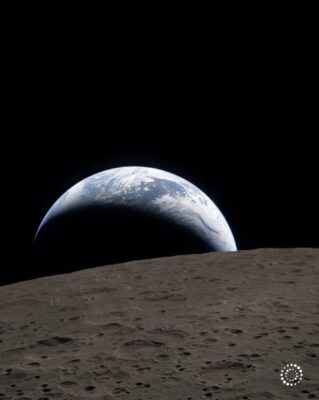
(Image: NASA)
RECENT POSTS


