
Considering Your Options.
 (
(Considering Your Options.
They say that the shortest distance between two points is a straight line – or at least a great circle as we navigate the globe. However, while geometrically efficient, the straight line may not always be the best strategy in aviation. And I recently had cause to contemplate this aspect of flight.
As the saying goes, in a single engined aircraft if you have to look for a field when the engine fails – you’ve left it too late. A part of the pilot’s cycle of activity should be an ongoing assessment of where to land should the unthinkable happen and the engine fails. Fortunately, in the planning phase we have the time and tools to assess our route and ideally track via friendly terrain and even airfields. Still, some choose to draw a straight line and put their faith in the reliability of the reciprocating engine.
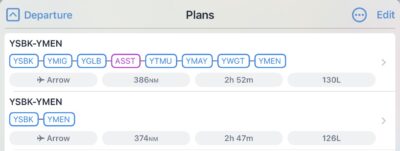
When I was instructing full time back in the dark ages, I used to have students plan to fly a direct course from Bankstown to Essendon. I would then have them fly via Mittagong, Goulburn, Yass, Tumut, Albury, Wangaratta and onto Essendon. The difference?……12 miles! And along the way was lower terrain, plentiful forced landing fields and actual airports. Also, remembering that lower terrain also offers breathing space from the cloud base for VfR pilots. I do recognise that this sort of planning isn’t always possible and that the urban sprawl has left many city airfields with very few options in the case of a failure.
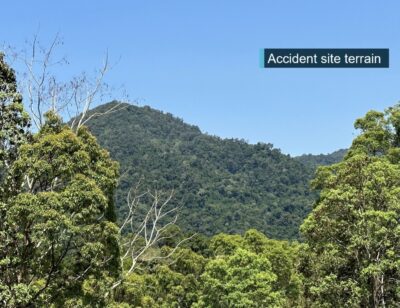
Personally, I had to make a forced landing over angry terrain many years ago when I was caught in an awkward situation. I was conducting a commercial licence flight test and advised the candidate that “the company” had requested that they return to Bankstown as the final leg of the flight had been cancelled. In doing this I was assessing the pilot’s management of an inflight diversion. They had been trained to be terrain aware and yet they turned straight onto the direct track and across flightpath across tiger country.
In their defence, they managed the exercise well. Planned the route, checked the weather and NOTAMs, checked the controlled airspace limits and advised Flight Service of the diversion as they turned towards Bankstown. From my perspective, this definitely wasn’t a fail, rather a debrief point for consideration. Was it legal? Yes. Was it prudent? Maybe not. And of course as we flew into an area of minimal options, the engine indications began to fluctuate.
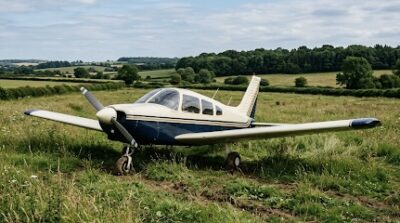
I had the candidate turn towards the only clearing that I could see as we began to trouble shoot the possible problem. However, soon the fluctuating indications became fluctuating engine surges and ultimately a failure. The short version is that I took over and we successfully landed in the field with some damage to the aircraft but more importantly, no damage to us. The straight line was definitely not the best option.
Even when flying a light twin on a dark night with a low freezing level, the height of the terrain below needs to be a consideration. And for me, that’s the key – it needs to be considered. We have a range of tools available to us to enhance our situational awareness, both in planning and in the execution of a flight. We need to step back and consider, if the engine fails at a critical point along my direct route, in retrospect, what will I wish I had chosen to do differently?
Take the initiative and act upon that “I should have…..” option, before the flight ever leaves the ground.
Cross country flying is one of the great pleasures of being a licensed pilot. That joy is even greater when the country we are crossing offers us safe options.

RECENT POSTS


